



From Detection to Foresight: Breakthrough Fetal Cardiac MRI Platform Unveiled at The 9th World Congress of Pediatric Cardiology and Cardiac Surgery
The 9th World Congress of Pediatric Cardiology and Cardiac Surgery was successfully held at the Hong Kong Convention and Exhibition Center in China, yielding fruitful outcomes. This conference highlighted five core features: interdisciplinary collaboration, interactivity, innovation, inspiration, and cutting-edge focus. It brought together global leaders in the field to engage in in-depth exchanges across multiple dimensions, including clinical and basic sciences, common and rare diseases, disease and health management, humanitarian projects, the integration of real and virtual technologies, as well as traditional core topics and cutting-edge explorations. The congress featured 18 thematic sessions, encompassing a variety of formats such as systematic course instruction, interdisciplinary dialogues, interactive workshops, thought-provoking debates, plenary sessions, pre-conference symposia, and oral and poster presentations. The topics covered a broad spectrum, including artificial intelligence and augmented reality, digital health and big data, innovative therapies from genes to cells, personalized pediatric cardiac diagnosis and treatment, and research on rare diseases, among other frontier directions.
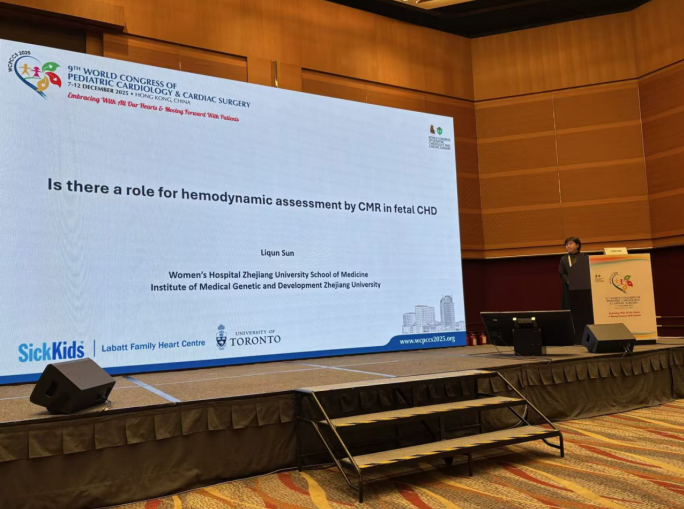
Dr. Sun Liqun, a researcher from our institute, was invited to deliver a special report titled "Does Cardiac Magnetic Resonance Hemodynamic Assessment Play a Significant Role in the Diagnosis and Treatment of Fetal Congenital Heart Disease?" As fetal medicine advances from mere diagnosis to comprehensive management, the current objective extends beyond merely "detecting" abnormalities to "foreseeing" risks and implementing proactive interventions, thereby improving neonatal outcomes. Dr. Sun Liqun's team successfully developed and validated an advanced fetal imaging modeling platform. This platform provides key biomarkers closely related to fetal survival rates and neonatal prognosis, establishing a scientific framework for perinatal neuroprotection research. The method innovatively integrates imaging, hemodynamic modeling, and maternal hyperoxia studies, forming a closed-loop system of "diagnosis-mechanism-intervention," with the application of golden-angle radial sampling and motion compensation algorithms being particularly crucial. The research uncovered a previously unknown direct link between delayed brain development and insufficient oxygen supply in fetuses with cyanotic congenital heart disease, innovatively identifying superior vena cava flow as an independent predictor of brain development, and for the first time establishing a critical association between placental function and early prognosis in such fetuses. These significant findings have been incorporated into the international guidelines and consensus documents of the American Heart Association (AHA), the Royal College of Obstetricians and Gynaecologists (RCOG), and the International Society of Ultrasound in Obstetrics and Gynecology (ISUOG). Based on the fetal cardiac magnetic resonance oxygen metabolism model, the research proposed a more conservative and effective management strategy for late-onset fetal growth restriction at term, significantly reducing unnecessary preterm births and their associated healthcare burden. Integrated fetal cardiac imaging technology is reshaping the perinatal management of congenital heart disease, not only optimizing clinical diagnosis and treatment pathways but also establishing the necessity of precise prenatal intervention from an evidence-based medicine perspective, ushering in a new era of mechanism-based personalized fetal medicine.
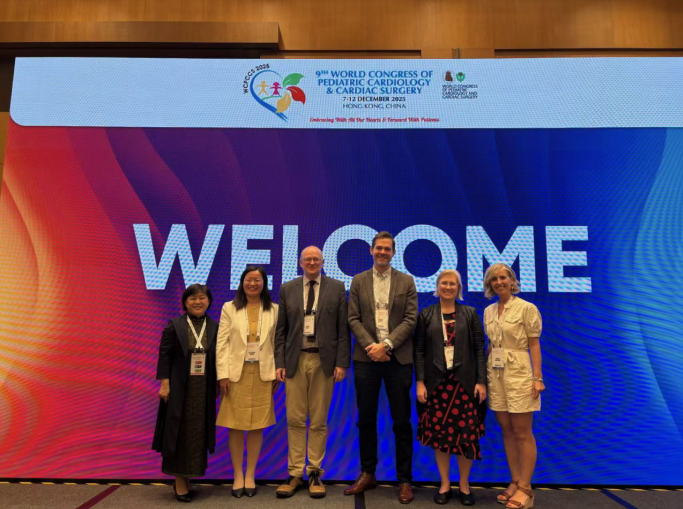
Currently, fetal cardiac magnetic resonance imaging has become a critical window guiding fetal intervention, delivery planning, genetic counseling, and treatment monitoring, providing a powerful tool for deepening the understanding of fetal circulatory physiology and improving clinical decision-making. During the conference, international experts such as Professor David Lloyd from King's College London School of Medicine also engaged in in-depth discussions on the latest advances in fetal cardiac imaging. Fetal cardiology emerged as a hot topic at the conference, highlighting the important trend of shifting the window for cardiac disease diagnosis and prevention earlier. Over the seven-day event, experts and scholars from top global centers conducted profound and substantive exchanges, jointly mapping out future development directions in the cardiovascular field and injecting new momentum into advancing the discipline and clinical practice innovation of pediatric cardiology and cardiac surgery.