


Hospital Motto
Holding a benevolent heart, delivering high-quality medical care,
seeking truth, pursuing innovation
-
2026-04-15
International Collaboration Report: Fetal MRI and Cardiovascular Research Exchange (March 2026)
<p style="margin-top:16px;margin-bottom:16px"><strong><span style="font-family: 'Times New Roman';color: rgb(15, 17, 21);font-size: 16px">I. Visit Overview</span></strong></p><p style="margin-top:16px;margin-bottom:16px"><span style=";font-family:'Times New Roman';color:rgb(15,17,21);font-size:16px">At the invitation of the International Society for Magnetic Resonance in Medicine (ISMRM), Dr. Zhenglun Alan Wei of Worcester Polytechnic Institute (WPI), and Professor Liona C. Poon of The Chinese University of Hong Kong, Sun Liqun from Zhejiang University traveled to Washington D.C., Worcester (USA), and Hong Kong SAR from March 4 to March 10, 2026. During the visit, Sun Liqun attended an academic symposium, delivered invited lectures, and conducted academic site visits and collaborative exchanges.</span></p><p style="margin-top:16px;margin-bottom:16px"><strong><span style="font-family: 'Times New Roman';color: rgb(15, 17, 21);font-size: 16px">II. Visit Outcomes</span></strong></p><p style="margin-bottom:0;margin-left:48px"><span style="font-family:'Times New Roman';color:rgb(15,17,21);font-weight:bold;font-size:16px">1. </span><strong><span style="font-family: 'Times New Roman';color: rgb(15, 17, 21);font-size: 16px">High-Level Academic Presentations</span></strong><span style=";font-family:'Times New Roman';color:rgb(15,17,21);font-size:16px">: At the ISMRM Prenatal MRI Workshop, Sun Liqun delivered two invited lectures entitled “Placental Development and Physiology (Health and Disease)” and “The Impact of Congenital Heart Disease on Fetal Brain Development.” These presentations showcased recent research advancements and facilitated in-depth discussions with international peers.</span></p><p style="margin-bottom:0;margin-left:48px"><span style="font-family:'Times New Roman';color:rgb(15,17,21);font-weight:bold;font-size:16px">2. </span><strong><span style="font-family: 'Times New Roman';color: rgb(15, 17, 21);font-size: 16px">In-Depth Technical Exchange and Collaboration</span></strong><span style=";font-family:'Times New Roman';color:rgb(15,17,21);font-size:16px">: A site visit was conducted at the AIMCardio Lab at Worcester Polytechnic Institute, where Sun Liqun engaged in intensive discussions with Dr. Zhenglun Alan Wei on technical details and clinical collaboration, laying the groundwork for future cooperation.</span></p><p style="margin-bottom:0;margin-left:48px"><span style="font-family:'Times New Roman';color:rgb(15,17,21);font-weight:bold;font-size:16px">3. </span><strong><span style="font-family: 'Times New Roman';color: rgb(15, 17, 21);font-size: 16px">Clinical Discussions and Platform Visits</span></strong><span style=";font-family:'Times New Roman';color:rgb(15,17,21);font-size:16px">: A visit to the Poon Lab at The Chinese University of Hong Kong enabled productive discussions with Professor Liona C. Poon on two key clinical topics: (1) fetal cardiovascular physiology in placental insufficiency, and (2) the effect of aspirin on smallforgestational-age infants delivered by pregnant women at high risk of preeclampsia. The exchange deepened understanding of these clinically challenging issues.</span></p><p style="margin-top:16px;margin-bottom:16px"><strong><span style="font-family: 'Times New Roman';color: rgb(15, 17, 21);font-size: 16px">III. Work Suggestions and Future Directions</span></strong></p><p style="margin-top: 16px; margin-bottom: 16px; text-align: left;"><span style=";font-family:'Times New Roman';color:rgb(15,17,21);font-size:16px">Based on the outcomes of this visit, the following future collaboration directions and recommendations are proposed:</span></p><p style="margin-bottom:0;margin-left:48px"><span style="font-family:'Times New Roman';color:rgb(15,17,21);font-weight:bold;font-size:16px">1. </span><strong><span style="font-family: 'Times New Roman';color: rgb(15, 17, 21);font-size: 16px">Technical Collaboration</span></strong><span style=";font-family:'Times New Roman';color:rgb(15,17,21);font-size:16px">: Focus on patientspecific computational fluid dynamics (CFD) modeling of the fetal aorta, with model validation using 4D Flow MRI. Both parties will further clarify technical details and collaboration points in this area to promote the application of cuttingedge techniques in fetal medicine research.</span></p><p style="margin-bottom:0;margin-left:48px"><span style="font-family:'Times New Roman';color:rgb(15,17,21);font-weight:bold;font-size:16px">2. </span><strong><span style="font-family: 'Times New Roman';color: rgb(15, 17, 21);font-size: 16px">Academic Exchange and Grant Collaboration</span></strong><span style=";font-family:'Times New Roman';color:rgb(15,17,21);font-size:16px">: Both sides have reached preliminary consensus on pursuing substantive cooperation in academic exchanges and joint research grant applications. Specific directions and implementation pathways have been identified.</span></p><p style="margin-bottom:0;text-autospace:none;text-align:center"><img src="/ueditor/php/upload/image/20260415/1776240633577969.png" title="1776240633577969.png" alt="image.png"/><span style=";font-family:'Times New Roman';font-size:17px"> </span></p><p style="margin-bottom:0;text-autospace:none;text-align:center"><strong><span style="font-family: 'Times New Roman';color: rgb(15, 17, 21)">Figure 1.</span></strong><span style=";font-family:'Times New Roman';color:rgb(15,17,21)"> </span><span style=";font-family:'Times New Roman';color:rgb(15,17,21);font-size:16px">March 5, 2026 — </span><span style=";font-family:'Times New Roman';color:rgb(15,17,21);font-size:16px">Keynote Lecture</span><span style=";font-family:'Times New Roman';color:rgb(15,17,21);font-size:16px">:</span><span style=";font-family:'Times New Roman';color:rgb(15,17,21)"> </span><em><span style="font-family: 'Times New Roman';color: rgb(15, 17, 21)">Fetal Cardiovascular Physiology in Placental Insufficiency</span></em><span style=";font-family:'Times New Roman';color:rgb(15,17,21)"> </span><span style=";font-family:'Times New Roman';color:rgb(15,17,21);font-size:16px">(25 minutes)</span></p><p style="margin-bottom:0;text-autospace:none"><span style=";font-family:'Times New Roman';font-size:17px"> </span></p><p style="margin-bottom:0;text-autospace:none;text-align:center"><img src="/ueditor/php/upload/image/20260415/1776240640750536.png" title="1776240640750536.png" alt="image.png"/><span style=";font-family:'Times New Roman';font-size:17px"> </span></p><p style="margin-bottom: 0px; text-align: center;"><strong><span style="font-family: 'Times New Roman';color: rgb(15, 17, 21)">Figure 2.</span></strong><span style=";font-family:'Times New Roman';color:rgb(15,17,21)"> </span><span style=";font-family:'Times New Roman';color:rgb(15,17,21);font-size:16px">March 6, 2026 — </span><span style=";font-family:'Times New Roman';color:rgb(15,17,21);font-size:16px">Keynote Lecture</span><span style=";font-family:'Times New Roman';color:rgb(15,17,21);font-size:16px">:</span><span style=";font-family:'Times New Roman';color:rgb(15,17,21)"> </span><em><span style="font-family: 'Times New Roman';color: rgb(15, 17, 21)">Prenatal Brain Injury in Congenital Heart Disease: Underlying Mechanisms and Comorbidities</span></em><span style=";font-family:'Times New Roman';color:rgb(15,17,21)"> </span><span style=";font-family:'Times New Roman';color:rgb(15,17,21);font-size:16px">(25 minutes)</span></p><p style="margin-bottom:0;text-autospace:none"><span style=";font-family:'Times New Roman';font-size:17px"> </span></p><p style="margin-bottom:0;text-autospace:none;text-align:center"><img src="/ueditor/php/upload/image/20260415/1776240647614067.png" title="1776240647614067.png" alt="image.png"/><img src="/ueditor/php/upload/image/20260415/1776240652629387.png" title="1776240652629387.png" alt="image.png"/><span style=";font-family:'Times New Roman';font-size:17px"> </span></p><p style="margin-bottom:0;text-autospace:none;text-align:center"><strong><span style="font-family: 'Times New Roman';color: rgb(15, 17, 21)">Figure 3.</span></strong><span style=";font-family:'Times New Roman';color:rgb(15,17,21)"> </span><span style=";font-family:'Times New Roman';color:rgb(15,17,21);font-size:16px">Group photo with Professor Mike Seed, Director of the Heart Center at The Hospital for Sick Children, University of Toronto Faculty of Medicine; Professor David Lloyd, Senior Research Fellow at the School of Biomedical Engineering & Imaging Sciences, King’s College London, Consultant in Fetal and Pediatric Cardiology; and Professor Mehdi Hedjazi Moghari, Professor in the Division of Pediatric Cardiology, West Virginia University School of Medicine, Co-Director of Research at the Heart Institute</span></p><p style="margin-bottom:0;text-autospace:none;text-align:center"><img src="/ueditor/php/upload/image/20260415/1776240654856747.png" title="1776240654856747.png" alt="image.png"/><span style="font-family: 'Times New Roman';color: rgb(15, 17, 21)"> </span></p><p style="margin-bottom:0;text-autospace:none;text-align:center"><span style="font-family: 'Times New Roman';color: rgb(15, 17, 21)">Figure 4. Group photo with Professor Mehdi Hedjazimoghari (Conference Chair) from the West Virginia University School of Medicine.</span></p><p style="margin-bottom:0;text-autospace:none;text-align:center"><img src="/ueditor/php/upload/image/20260415/1776240662472904.png" title="1776240662472904.png" alt="image.png"/><strong><span style="font-family: 'Times New Roman';color: rgb(15, 17, 21);font-size: 16px"> </span></strong></p><p style="margin-bottom: 0px; text-align: center;"><strong><span style="font-family: 'Times New Roman';color: rgb(15, 17, 21)">Figure 5.</span></strong><span style=";font-family:'Times New Roman';color:rgb(15,17,21)"> </span><span style=";font-family:'Times New Roman';color:rgb(15,17,21);font-size:16px">March 7–8, 2026 — Visit to AIMCardio Lab, Department of Biomedical Engineering, Worcester Polytechnic Institute.</span></p><p style="margin-bottom: 0px; text-align: center;"><img src="/ueditor/php/upload/image/20260415/1776240671400885.png" title="1776240671400885.png" alt="image.png"/><span style=";font-family:'Times New Roman';color:rgb(15,17,21);font-size:16px"> </span></p><p style="margin-bottom: 0px; text-align: center;"><strong><span style="font-family: 'Times New Roman';color: rgb(15, 17, 21)">Figure 6.</span></strong><span style=";font-family:'Times New Roman';color:rgb(15,17,21)"> </span><span style=";font-family:'Times New Roman';color:rgb(15,17,21);font-size:16px">March 10, 2026 — Visit to Poon Lab, Department of Obstetrics and Gynaecology, The Chinese University of Hong Kong, with a group photo of Professor Poon and the team</span></p><p style="margin-bottom: 0px; text-align: center;"><span style=";font-family:'Times New Roman';color:rgb(15,17,21);font-size:16px">.</span><img src="/ueditor/php/upload/image/20260415/1776240681716185.png" title="1776240681716185.png" alt="image.png"/></p><p style="margin-bottom: 0px; text-align: center;"><strong><span style="font-family: 'Times New Roman';color: rgb(15, 17, 21)">F</span></strong><strong><span style="font-family: 'Times New Roman';color: rgb(15, 17, 21)">igure 7.</span></strong><span style=";font-family:'Times New Roman';color:rgb(15,17,21)"> </span><span style=";font-family:'Times New Roman';color:rgb(15,17,21);font-size:16px">Discussing “Research Advances in Fetal Growth Restriction” with Professor Poon and</span></p><p style="margin-bottom: 0px; text-align: center;"><span style=";font-family:'Times New Roman';color:rgb(15,17,21);font-size:16px">her team.</span></p><p style="margin-bottom: 0px; text-align: center;"><img src="/ueditor/php/upload/image/20260415/1776240691169937.png" title="1776240691169937.png" alt="image.png"/></p><p style="text-align: center;"><strong><span style="font-family: 'Times New Roman';color: rgb(15, 17, 21)">Figure 8.</span></strong><span style=";font-family:'Times New Roman';color:rgb(15,17,21)"> </span><span style=";font-family:'Times New Roman';color:rgb(15,17,21);font-size:16px">On the Integrated Prenatal and Postnatal Management of Fetal Transposition of the Great Arteries.</span></p><p><br/></p>LEARN MORE > -
2026-04-15
Targeting Urea Cycle Overcomes Chemo-Resistance in Endometrial Cancer: WHZJU Research Presented at Major European Congress
<p style="text-align: left;"><br/></p><p style="text-align: center;"><img src="/ueditor/php/upload/image/20260415/1776240388843442.png" title="1776240388843442.png" alt="image.png"/><span style=";font-family:宋体;font-size:14px"> </span></p><p><span style=";font-family:宋体;font-size:14px"><span style="font-family:Calibri">Dr. Li Yang, an Associate Professor from the Department of Gynecologic Oncology at</span></span><span style=";font-family:宋体;font-size:14px"> <span style="font-family:Calibri">the Women</span></span><span style=";font-family:Calibri;font-size:14px">’</span><span style=";font-family:宋体;font-size:14px"><span style="font-family:Calibri">s hospital, </span></span><span style=";font-family:宋体;font-size:14px"><span style="font-family:Calibri">School of Medicine, Zhejiang University delivered a significant oral presentation at the 27th Annual Meeting of the European Society of Gynaecological Oncology (ESGO), held in Copenhagen, Denmark, from February 25 to March 1, 2026.</span></span></p><p><span style=";font-family:宋体;font-size:14px"> </span></p><p style="text-align: center;"><img src="/ueditor/php/upload/image/20260415/1776240392176133.png" title="1776240392176133.png" alt="image.png"/><span style=";font-family:宋体;font-size:14px"> </span></p><p><span style=";font-family:宋体;font-size:14px"><span style="font-family:Calibri">The presentation took place during the highly selective "Translink" session, a dedicated forum designed to highlight the most promising translational research poised for clinical impact. Dr. Li was specially invited to present his team's latest research, entitled "Targeting Urea Cycle Reverses Paclitaxel Resistance in TP53[R273C]-Mutant Endometrial Cancer Driven by ASS1-Enhanced Ammonia Metabolism."</span></span></p><p><span style=";font-family:宋体;font-size:14px"><span style="font-family:Calibri">This study addresses a critical challenge in treating endometrial cancer</span><span style="font-family:宋体">—</span><span style="font-family:Calibri">specifically, taxane resistance in tumors harboring the TP53 R273C mutation. Dr. Li's research demonstrates that aberrant activation of the urea cycle enzyme ASS1 fuels ammonia metabolism, creating a metabolic vulnerability. By targeting this pathway, the research team successfully reversed chemoresistance in preclinical models, offering a novel therapeutic strategy.</span></span></p><p><span style=";font-family:宋体;font-size:14px"><span style="font-family:Calibri">"The 'Translink' session is reserved for science that bridges the gap between bench and bedside," said Dr. Li during his presentation. "Our findings not only elucidate a new metabolic mechanism of drug resistance but also identify a actionable target that could potentially restore sensitivity to standard chemotherapy."</span></span></p><p><span style=";font-family:宋体;font-size:14px"><span style="font-family:Calibri">The presentation garnered substantial attention from leading international experts in gynecologic oncology, prompting vigorous discussion regarding the translational roadmap and future clinical applications. The positive reception underscores the international visibility of Zhejiang University's efforts in advancing translational medicine for women's cancers.</span></span></p><p><span style=";font-family:宋体;font-size:14px"><span style="font-family:Calibri">"This recognition at ESGO signifies that our work is resonating with the global scientific community," added Dr. Li. "We are optimistic that these findings will lay the groundwork for deeper international collaborations and ultimately contribute to improved outcomes for patients with refractory endometrial cancer."</span></span></p><p style="text-align: center;"><img src="/ueditor/php/upload/image/20260415/1776240398740743.png" title="1776240398740743.png" alt="image.png"/><span style=";font-family:宋体;font-size:14px"> </span></p><p><br/></p>LEARN MORE >
Departments & Centers
Education & Training
LEARN MORE >
-
2020-06-05
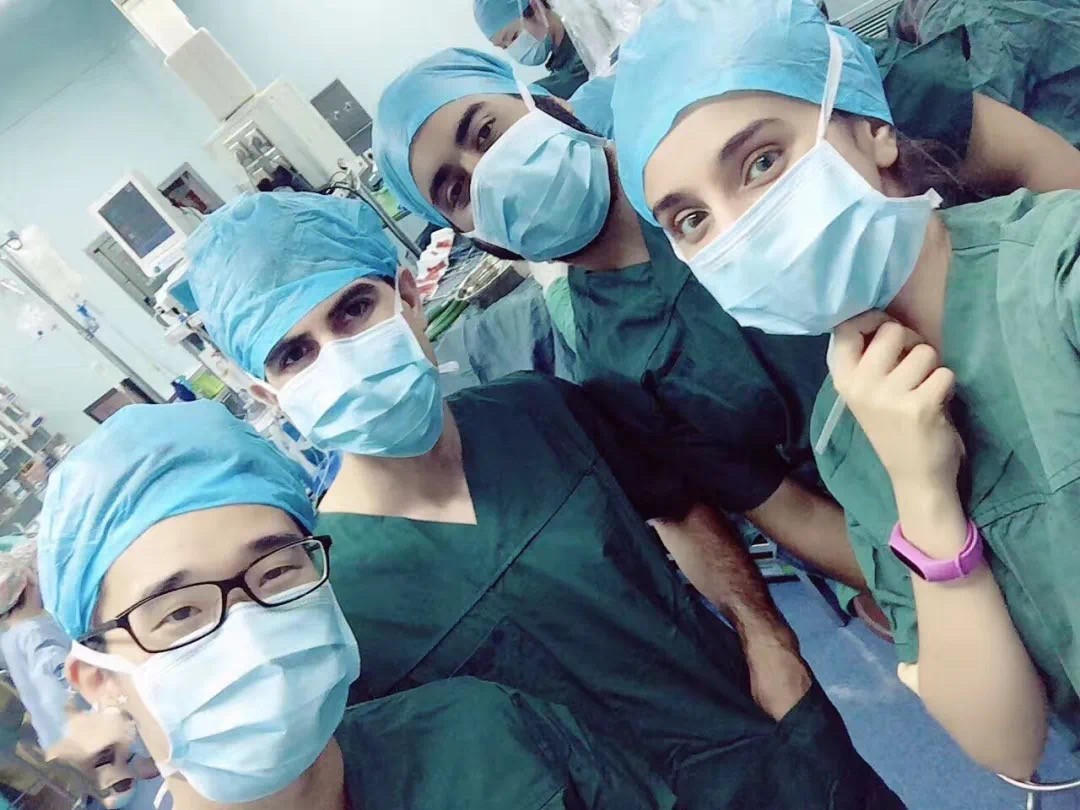
Introduction to MBBS program
Zhejiang University is located in east coastal city of Hangzhou, the capital of Zhejiang province, which lies 180km south of China’s largest commercial center Shanghai. As one of the seven ancient capital cities of China, Hangzhou has a history of over 2,200 years. The city is also a world-famous tourist resort praised as ‘a paradise on earth’, boasting very favorable natural conditions, with a mild climate, convenient transportation systems, picturesque scenery and rich cultural heritage. In the 13th century, the Italian traveler Macro Polo admired Hangzhou as ‘the most beautiful and splendid city in the world’.Founded in 1897 as one of the earliest institutions of higher learning in China, Zhejiang University is now a leading research university under the direct administration of China’s Ministry of Education. Reputed as the ‘East Cambridge’ in history, Zhejiang University has always been ranked among the top universities in China in terms of its academic strength shown in teaching, research and social service.For more information about Zhejiang University please go to its homepage:http://www.zju.edu.cn/english/ Introduction Zhejiang University School of Medicine was first founded as Chekiang (Zhejiang) College of Medicine in 1912. It became the Medical School of Chekiang (Zhejiang) University later, and again separated from the university and eventually developed into Zhejiang Medical University in 1960. In 1998, former Zhejiang University, Hangzhou University, Zhejiang Agricultural University and Zhejiang Medical University were merged to form a new Zhejiang University. The following year, School of Medicine (ZUSM) was re-established and became the largest school among 36 schools and colleges of Zhejiang University. Although ZUSM has changed its names and locations several times, it remains the most eminent medical institutions in the region. Today it ranks as one of the top ten medical educational institutions in China, whose dynamics and strengths in medical education, scientific research and clinical practice are well recognized. ZUSM has been pursuing high quality education and aiming at developing extraordinary medical practitioners. The School is composed of 10 departments: School of Basic Medicine, School of Public Health, 1st Clinical Medicine, 2nd Clinical Medicine, 3rd Clinical Medicine, 4th Clinical Medicine, School of Obstetrics and Gynecology, School of Pediatrics, School of Stomotolagy and School of Nursing. Apart from these academic departments, there are 8 affiliated hospitals and 8 cooperated hospital. Currently there is 4 national key disciplines, 45 national key clinical specialties, 1 national key laboratory, 28 provincial key laboratories. ZUSM boasts rich human resources, reliable, well-established, and capable of fulfilling educational, academic or health service missions. There are more than 1,000 full-time or part-time professors and associate professors including four members of National Academy of Science and Engineering devoted to undergraduate and postgraduate programs. The school currently offers five-year program for bachelor degree , eight-year M.D. program and six -year MBBS (in English Media) in medicine. ZUSM has established international links with scores of medical institutions in Asia, Europe, Australia and North America. Programs like collaborative research projects and exchanges of faculty and students have been launched.For more information about School of Medicine, please visit:http://www.cmm.zju.edu.cn/index.php?web=english&pc=1 Curriculum of MBBS program The program takes six years to complete.(The curriculum is subject to change accordingly.) YearCourses1st Semester2nd Semester1stBasic Mathematics for Medicine I,General Physics Lab, Cell Biology,AcademicIntroduction to Modern BiologicalOrganic Chemistry, Chinese II,YearScience, General Physics, Basic MathematicsSystematic Anatomy, History of(Pre-Med)for Medicine Ⅱ, Chinese ⅠMedicine, Global Health, MedicalPhilosophy, Early Exposure ToClinic2ndBiochemistry, Histology &Biochemistry Lab, Physiology, ,AcademicEmbryology, ,Regional Anatomy, MedicalPathophysiology, Basic TraditionalYearGenetics, Chinese ⅢChinese Medicine , Medical(Pre-Clinic)Psychology, Chinese IV3rdMedicalPharmacology, ForensicAcademicImmunology, Pathology, Medical , Microbiologmedicine , Internal Medicine Yeary,Medical Chinese II, Biostatistics(Pre-Clinic)&Parasitology, Biomedical Informatics,Survey of China, Medical Chinese I4thSurgery I, Communicable Diseases, Community Medicine, Preventive Medicine,Social Medicine & Ethics, Epidemiology, Medical Chinese IⅡ,BasicMedical Sciences ExamSurgery II, Radiology, Obstetrics &AcademicGynecology, Internal MedicineYearII, Medical Chinese IV(Pre-Clinicand Clinic)5thPediatrics, Internal Medicine Ⅲ,Surgery Ⅲ, Dermatovenereology, Psychiatry,NeuAcademicEmergency Medicine,rology, ClinicalYearOtorhinolaryngology, Ophthalmology ,Training, Stomatology,(Clinic)Medical Chinese V,Emergency Medicine6thSenior clerkshipSenior clerkshipAcademicClinical Sciences Exam,YearComprehensive Clinical Skills Exam(Clinic)*The students must score at least 195 or above in HSK(Hanyu Shuiping Kaoshi, the Chinese Proficiency Test) Level IV and pass HSKK(HSK Speaking Test) Intermediate Level before taking the senior clerkship in China. *More than top 20% students can get outstanding academic performance scholarship every year. Requirements for Admission 1 、 M.B.B.S. candidates must have passed examination with minimum percentage of marks over 70% aggregate in Math, Physics, Chemistry, and Biology (Zoology &Botany)2、Senior high school diploma3、Transcript for all the courses in senior high school4 、 Score report of English language Test(e.g. TOEFL/IELTS/OTHER)(If applicants’ native language is not English)5、Two recommendation letters with the signature of the referee are needed. Letters must include phone number or email address.6 、 Personal statement, should include study experience, reasons for application, personal strengths. Less than 800 words.7. Photocopy of award-winning Certificates related to academic courses during your senior high school period. (If any)8 、 Candidates must be of the age between 17 years and 30 years on 1st September of the year of admission. Application Procedure 1、Fill in the application form online for admission to Zhejiang University. 2、Submit the completed application form and 800Chinese Yuan(Approx US$ 120) application fee to the International College, Zhejiang University. Copies of diplomas or certificates and course transcripts and two letters of recommendation are needed.3、Time for application:Please check the information on the website of International college.4、The Admission Notice and the form of( JW202 form) will be mailed to the applicant after his/her qualifications are verified.5、Apply for a X1 student visa at the Chinese Embassy or Consulate. Register at the International College during the period specified in the Admission notice. Fees 1. Registration: 800 Chinese Yuan(Approx US$ 120)2. Tuition: 42,800 Chinese Yuan(Approx US$ 7,000) /year for M.B.B.S3. Accommodation: 9,000 Chinese Yuan (Approx US$1300)/year/person, for twin rooms;13, 500 Chinese Yuan (Approx US$2000)/year/person, for single rooms4. Residence permit: 400 Chinese Yuan(US$60)/year5. Health examination: 400 Chinese Yuan(US$60)6. Health insurance: Covered by University Health insurance plan (see details)7. Miscellaneous: Food around 8,000 Chinese Yuan(US$1,200)/year(Depends on individuals) * The fee for accommodation excludes electricity and water bill. Hostels and food Students are expected to live in the International Students Dormitory, where twin rooms or single rooms are available. Almost every room is equipped with telephone, internet access, private bathroom with shower and air-conditioners. Public kitchens and washing machines are also accessible to students in the dormitory.The University has on all its campuses several convenient and inexpensive restaurants where a good variety of Chinese and Western foods are served. There is also a small restaurant to serve Muslim food.For more information about admission application, please visithttp://iczu.zju.edu.cn/english/ For further information, please contact us as follows: International Students Education OfficeSchool of Medicine Zhejiang UniversityP.O. Box 50866 Yu Hang Tang Road Hangzhou, Zhejiang 310058 P.R.China Admission for MBBS program Tel: +86 (571) 88208064Fax: +86 (571) 88208097Email: huangjiyi@zju.edu.cn Website: Chinese http://www.cmm.zju.edu.cn/English http://www.cmm.zju.edu.cn/index.php?web=english&pc=1Note: The above information is subject to change accordingly.Admission Brochure for MBBS program.pdfLEARN MORE > -
2020-03-13
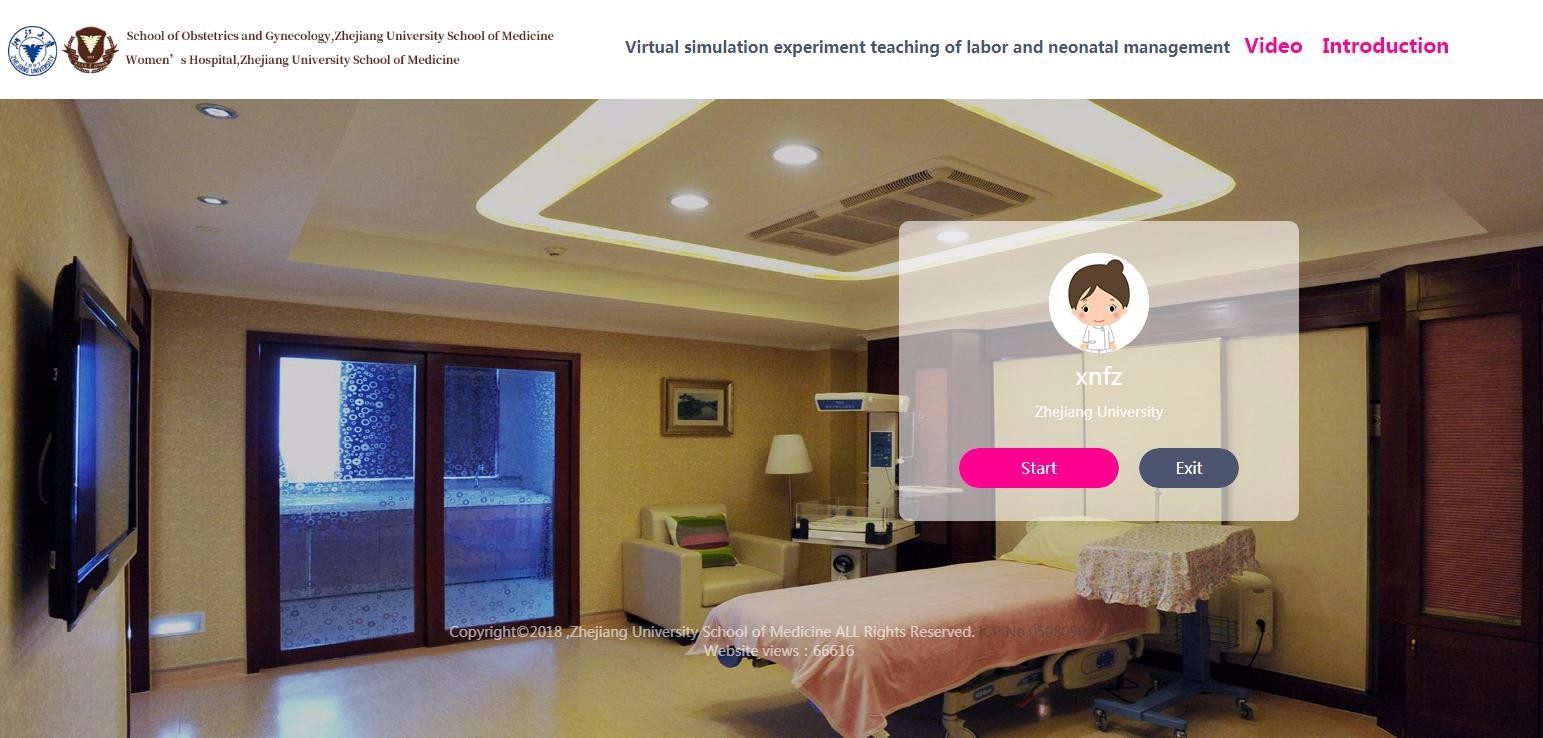
Virtual Simulation Experiment Teaching of Labor and Neonatal Management
Virtual Simulation Experiment Teaching of Labor and Neonatal ManagementLEARN MORE > -
2020-03-13
Clinical medicine curriculum
Clinical medicine curriculum is the core of professional curriculum plan of clinical medicine major, which consists of theoretical courses and clinical practices.LEARN MORE >